
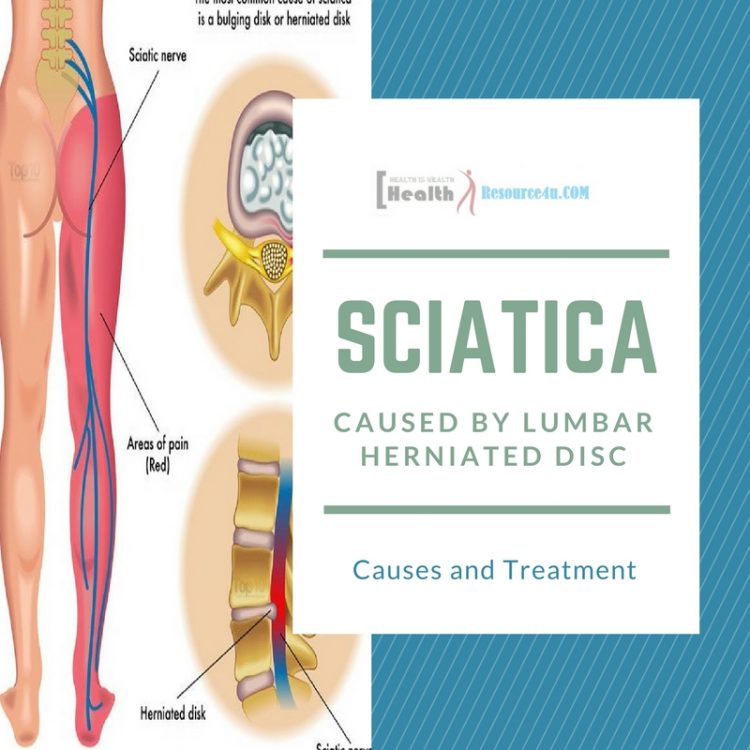
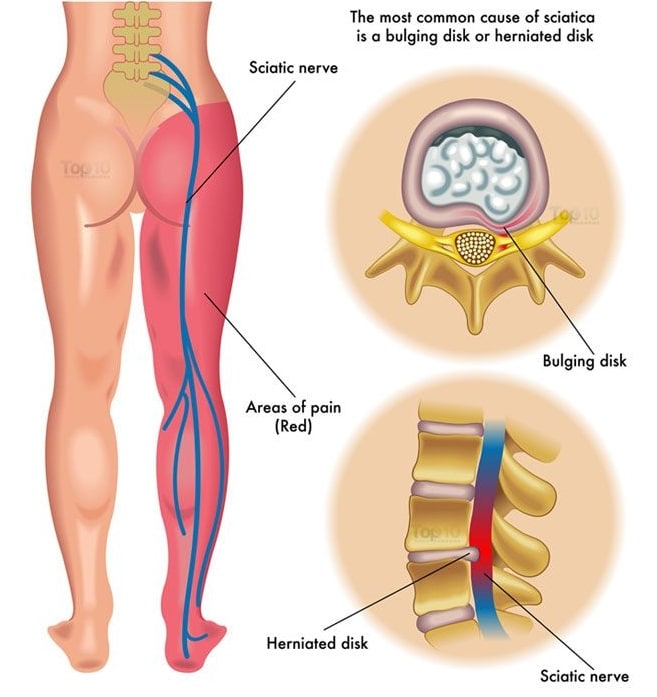
Mostly a sciatica pain occurs due to a disc called Herniated Disc or Lumbar Raptured Disc. The Patient facing sciatica due to herniated disc feel this pain primarily in their lower abdomen or lower back side of the leg. Even small pressure on the nerves causes extraordinary pain.
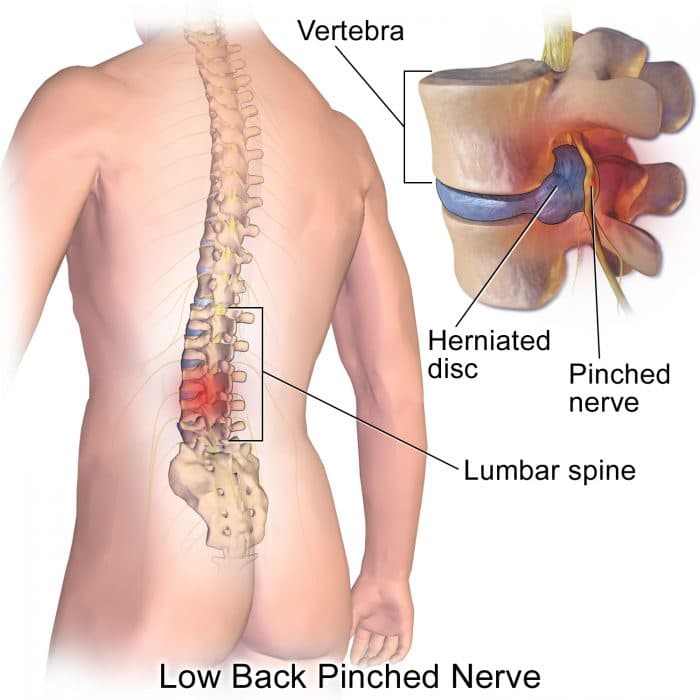
When you face severe pain in your neck or on the lower back side of your buttock or in your thoracic spine, it can be caused due to Sciatica. Now you must have a query – What is Sciatica? The joint of your spine is supported by some spinal discs. These discs exist in 5 vertebrae. When any disc forces on nerve roots it creates pain wherever that nerve flow in the body.
Sciatica is one of the major health issues as it causes severe pain, numbness, weakness tingling in the affected nerve and the pain passes throughout the area where this nerve moves around the body. The herniated disc stretches out from lumbar spine to till the foot so its patient has to face searing pain in foot area along with numbness.
Day by day the number of sciatica patients are increasing and this becomes a severe health issue as it disturbs normal living style of the affected patient. It is been observed that mostly sciatica pain arises due to a herniated disc. So here we will discuss thoroughly regarding sciatica causes by a Herniated Disc.
Symptoms of Sciatica From Lumbar Herniated Disc:
Table of Contents
An injury to lumbar herniated disc causes sciatica pain. The lumber spine exists in the lower back area of the body. When it gives pressure to nerves the pain starts circulating till the whole area (lower back to foot) it flows around. Here enlisted some symptoms of Sciatica From Lumbar Herniated Disc.
- Severe pain in the lower buttock and down the foot area.
- Numbness in the area where the sciatic nerve stretches.
- Weakness can be felt where ever the sciatica nerve stretches in the body due to pressure by a herniated disc.
- Tingling and burning in the lower backside and in both the legs.
- Severe pain while sitting (for a long time), sneezing and moving.
- Intolerable pain in both the legs.
- Lack of control of bowel or bladder.
If you are facing any of these above-mentioned symptoms you immediately need a medical help. Before the problem gets severe, give yourself proper treatment after consulting the physician.
Causes of Sciatica Due to Herniated Disc:
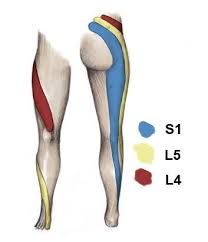 The sciatica is a severe pain condition which occurs in nerves mainly in the lower back legs. This generates intensified pain and stretches around the area where affected nerves move around. Here we have mentioned major causes of sciatica due to lumbar herniated disc:
Heavy Usage of Tobacco
It is been observed that people who consume lots of tobacco products become the sciatica patient as because tobacco destroy herniated disc which creates pain in sciatic nerve.
Lack of Nutritional Food
Lack of nutrition makes our body very weak and hence it reduces the power of immunity. Henceforth even a small damage in nerves causes severe pain. Due to inadequate nutrition, it’s really become difficult to fight with the severe pain caused by the lumbar herniated disc.
Ageing Effect
A biochemical changes in the body due to the aging effect makes the discs very dry ultimately the discs get weaker so the discs become incapable of handling shock arises from the movement of the body. This causes sciatica pain.
The same rule is applicable to the Lumbar Herniated Disc also. As it gets weaker due to aging effect, it loses its efficiency and become incapable to perform its job.
- Negligence in Exercise: A lifelong healthy body requires regular exercise to keep your body more stretchable and movable throughout your lifetime. When you follow regular exercise practice it gives strength to your muscle hence there is no chance of getting a pain like sciatica.
- The habit of Incorrect Body Posture: The main task of the lumbar herniated disc is to giving support and strength to your body but due to some poor and incorrect body posture it throws unnecessary pressure on the lumbar spine.
Hence it reduces its ability and then become incapable to support the weight of your body. Here occurs the sciatica pain.
In order to protect us from the severe pain of sciatica, it is necessary to maintain some healthy practices in our day to day life. We should avoid improper twists and movements of the body, wrong lifting process, never ignore any injury etc. All these can be a reason for the disc herniation.
Prevention of Sciatica Caused by Herniated Disc:
 With some prudent precaution methods, you can avoid the chances of sciatica due to Lumbar Herniated Disc. So apply these below mentioned some good habits and protect yourself from any danger chronic pain such as sciatica.
- Start a habit of eating healthy and nutritious food as it will give strength and support to your bones and muscles.
- Never try or repeat an incorrect body posture in your day to day life as it can cause an unusual pain and later on can damage the disc causing it herniation.
- Avoid tobacco totally. If you have a habit of smoking then stop it today as in future it can damage herniated disc and you have to suffer then from severe sciatica pain.
- Be careful while lifting any heavyweight. Any wrong posture while lifting weight can directly damages to any of your body parts internally.
- Do workouts every day, as along with keeping you healthy and fit it will also guard you against aging effects when your mussels start getting weaker naturally.
Applying all these healthy and prudent steps can save you to a greater extent from the lower back pain arising out of the lumbar herniated disc.
Diagnosis of Lumbar Herniated Disc:
Before sciatica by Lumbar Herniated Disc cause you sever and intensified pain and hampers your normal life, give it a proper treatment so that the pain suppresses before reaching to its extreme condition. Below we have mentioned some fruitful treatment process for a herniated disc.
Take X-ray: A herniated disc gives an intense pain to the person affected out of it. Sometimes the symptoms of sciatica pain itself make the affected person aware that he or she is suffering from sciatica pain. But this doesn’t happen every time.
When the patient is not aware of the reason for the pain then he goes to the physician for its diagnosis. Here the physician asks for the X-ray report of the affected area for clearing out the reason of pain. In x-ray report, it figures out the sciatica pain or disc herniation.
So for the treatment of sciatica by Lumbar Herniated Disc, it is necessary to take an x-ray report in order to start proper medication.
MRI or CT Scan Report: For accurately locating the area of disc damage, doctors often suggest for MRI or CT scan. These reports clear out the extent of damage occurred in a herniated disc. This report is also important as because it depicts soft and little tissues.
The MRI report gives a better idea to the physician to diagnose it as the report finds out the real position and area of the herniated disc. This is a trusted imaging test.
Myelogram Test: For certain patients’ myelogram test is suggested by the doctors for getting the perfect and accurate report to find out the real area which is affected.
Under myelogram test, a dye is injected into the body. This dye helps while doing CT scan as it easily depicts the area causing a problem.
Treatment Procedure for Lumbar Disc Herniation without Surgery:
In the initial stage of Lumbar Disc Herniation, doctors give medication and other non-surgical methods are applied to cure it. Below is mentioned the treatment procedure which is followed to cure sciatica in its initial stage:
- If any injury occurs, physicians generally recommend for medications and cold therapy.
- Under the cold therapy, ice is applied to the affected area. While applying ice it should be taken care that it is not applied directly to the surface which is affected. Wrap it in a clean cotton cloth and then apply it but not for more than 15 minutes.
The cold therapy reduces the pain, muscle contraction and decreases the flow of blood due to injury. So as a First Aid, cold therapy is applied within 24 to 48 hours of injury.
- Medication is given by the doctors to reduce swelling, muscle spasm these are called anti-inflammatory medicines and painkillers for relaxing the acute pain arrived out of injury.
- NSAIDs or Non-Steroidal Anti Inflammatory medicines are given for the treatment of pain. It reduces both pain and swelling.
- After 48 hours of injury heat therapy is used for treating the injury area. Through heat therapy blood flow is increases which give relaxation to soft tissues with warm. This enlarged blood flow throws out toxins that might be accumulated due to muscle spasm and disc injury.
Don’t apply this heat therapy on the injured surface directly instead apply it after wrapping the heat source in a towel. Maximum it can be applied for twenty minutes.
- Injection to Spine: If the pain gets severe even after medication then the doctors recommend for an epidural steroid injection in the spine. This injection helps to put the anti-inflammatory medicine near to the lumbar spine nerve which is affected. This injection provides early relief from pain.
- The last non-surgical treatment for curing herniated disc is Physical Therapy. The patient is recommended to consult with the physical therapist. Under this therapy different treatments are applied on the affected area for reducing the pain and also for enhancing its flexibility.
Under this therapy, the physiotherapist applies different treatment procedures and look the progress report and as per the report the therapist advice for other treatment procedures. Under this therapy the treatment procedures which are applied – cold & heat therapy, soft massage, pelvic traction, stretching etc.
All these non-surgical procedures if applied and followed by the patients seriously then they can recover soon and also they do not have to go for any surgical procedure for sciatica due to a herniated disc.
Whatever the non-surgical procedure you are thinking to apply for curing disc herniation must consult at first with doctor and move as per his advice. Also, ask the doctor about the side effects that may be occurred due to the application of any of the therapy mentioned above.
Treatment Procedure for Lumbar Disc Herniation with Surgery:
If the symptoms of herniated disc don’t get vanished out of applying all the non-surgical treatment then the doctors recommend for spinal surgery for getting relieved from intense pain, weakness in leg and loss of strength.
In very rare cases bladder or bowel control is lost but this kind of cases occurs very rarely. If this occurs to you then you need immediate attention as this can be chronic.
Surgery of spine is quite a big issue as spine gives support to the whole body so never take any quick decision. Be calm and take every step prudently. Always look for a second or third opinion. If all the doctors are recommending for the surgery then only decide.
Through surgery affected intervertebral disc is removed for getting relief from severe leg pain and nerve pressure.
Under surgical procedure for curing lumbar disc herniation, a process called laminotomy is applied depending on the case. Under this process, some bone part can also be removed for reaching the herniated disc.
There is a spine surgery called Minimally Invasive Surgery on Spine which makes the surgery treatment less panic. Under this surgery process microscope and other advanced devices are used so there is no requirement of big cuts while doing the surgery.
Surgery process can give you complete relief from sciatica due to herniated disc but as much as it is possible, it must be tried first that you get relieved from the non-surgical process itself.
Some wrong posture and lifestyle in your younger stage cause you to face severe sciatica pain in the older age. As the study says sciatica due to herniated disc is the most common to find among the patients of sciatica so, it is suggested to our readers to follow the healthy steps as mentioned in this article in their daily lifestyle and stay fit forever.