
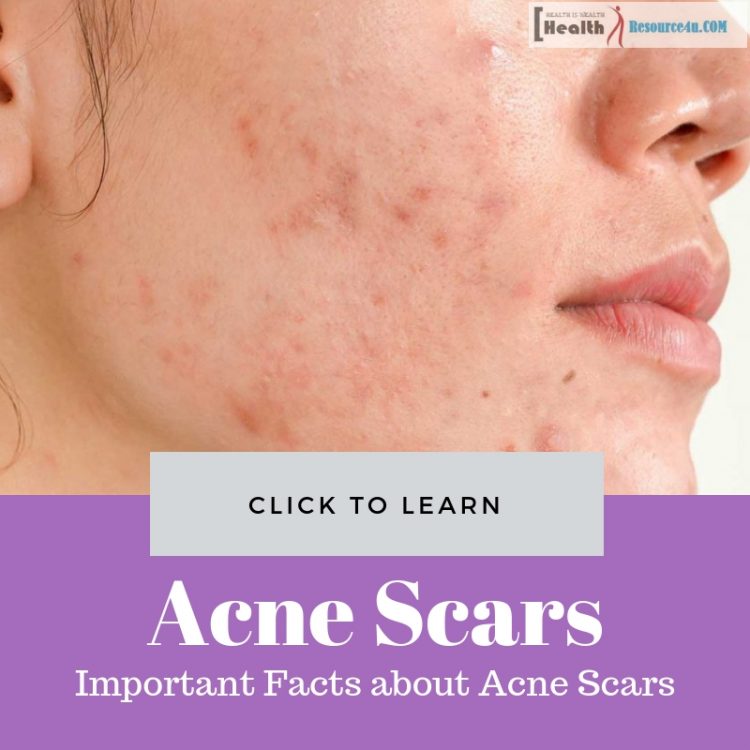
Acne scars develop because inflammatory acne in the affected skin area causes to produce less collagen so it remains unhealed leaving spots and scars behind. Acne scars are a common concern which can be cleared up with proper care and treatment if the affected person remains aware of the important facts about acne scars.
Most of the acne scars began to develop due to improper handling of the affected zone like some people try to remove them by own by popping pimples or picking them or extract blackheads by fingers etc. These improper self-treatment methods increase the chances of brown acne spots and scars on the misused skin portion.
For some people, acne scars remove and fade on its own with time but for some people, these scars remain lifetime which not only deteriorate their beauty but also affects their self-esteem and confidence level.
However, the good news is that all kind of acne scars are treatable with a proper intervention of medical treatment. So it is very essential that if you develop inflammatory acne or have this issue very frequently then you must consult with a dermatologist.
The doctor will analyze first what type of acne scars you have developed and depending on different factors related to your acne growth issue they will suggest an accurate treatment plan to you.
Apart from medical treatment acne scars can be removed and prevented to a great extent with different natural homemade remedies. These remedies will ensure safety from all side effects which are associated with medical treatment of acne scars. Also, it will be cost effective too.
5 Interesting Facts about Acne
Table of Contents
Before planning for any medical treatment intervention or applying your own DIY remedies at home you must aware of some important and interesting facts about the acne scars. This will help you better to decide on your treatment care with full clarity.
Acne Scars Doesn’t Clear Up on Its own Always
Some people don’t give any kind of care or worry about acne with a belief that its scars will disappear on its own with time. This belief is partially true but it is applicable only for the mild forms of acne like blackheads and whiteheads which disappears when its course completed.
However, this belief doesn’t work positively with the severe forms of acne which last for a very long duration of time and get inflamed with time. These types of chronic acne are likely to leave scars behind it.
So without ignoring such acne it should be consulted and treated by the help of a skin specialist doctor otherwise it will surely leave an ugly scar behind it.
Popping Pimples Doesn’t help to Remove the Blemishes or Scars
This misconception is very popular among teenagers who are quite likely to develop acne issue due to their hormonal changes that popping or picking pimples will help to remove the blemishes or scars which is absolutely wrong.
Picking at a pimple or popping it will trap some dirt particles and bacteria under the skin. This trapped dirt and bacteria will create further irritation to blemishes leading to develop more severe scars.
So it is very important that you remain very gentle while cleansing your acne lesions areas on the skin for avoiding popping and squeezing risk.
Acne is not a Contagious Diseases
People have a misconception regarding acne and acne scars that it is a contagious skin disease which is not true. The fact is that acne or acne scars are not contagious diseases and it doesn’t spread through contact or touch of the affected person’s skin.
The truth is that acne or its scars are processed in the deep inside dermis of skin so it is highly impossible to spread in the skin of other people who comes in the contact of an affected person.
This is a personal skin condition which develops due to own specific concerns of a person and doesn’t contract the skin condition to others.
Acne Scars can Develop in All Skin Types
Any skin type person can develop acne and it is not limited to highly oily or dirt prone skin type people. So people who have a belief that acne only develops in oily skin types or in the lack of regular skin cleansing are not true.
This skin issue can develop in all skin type people. So if you develop acne scars this doesn’t imply that your skin is unclear or dirty. The acne develops due to underneath oil glands when its secretion is either obstructed or due to excess secretion from these glands.
People who cleanse their face excessively or do scrubbing with the perception that it will help in removing acne and acne scars, in reality, causes more damaging to their skin. They must understand the fact that only dirt and their skin type are not responsible for this skin issue and they should look for other essential cares for their skin in order to make it healthy and scars free.
The Treatment of Acne Scars Depends on Its Types.
Acne scars develop in different forms on the basis of that it is divided into different types. So as per the specific type of acne scars, a doctor will decide for its treatment procedure. In general, there are two most common types of acne scars mentioned below.
- Atrophic Scars- The atrophic scars are shallow pitted scars with smoother border area. Ice pick scars one of the common types of atrophic scars which are very deep pitted scars along with sharp border areas.
- Hypertrophic Scars- The hypertrophic acne scars are raised forms of scars on the skin surface which can be felt through touch. These types of scars are less common over the face area it mostly develops around the chest and back portion of the body.
Common Treatment Methods for Acne Scars
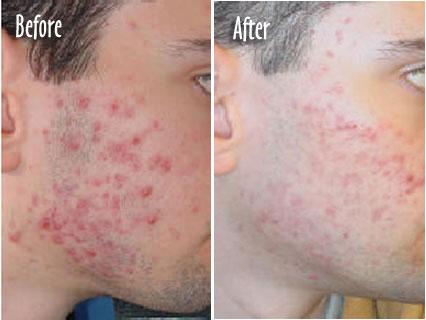
The treatment of acne scars depends on the specific type and severity of the acne scars. For example for the mild forms of acne scars mostly no treatment is needed as these scars disappear on its own with time.
However, if it doesn’t disappear and develops noticeable changes in your appearance it can be treated effectively through different effective acne scars treating measures. For severe forms of acne scars which inflamed with time immediate treatment is needed otherwise, it develops and gets chronic with time if it remains untreated.
Some common acne scars removal treatment methods which are very popular as well as effective too are described below.
Micro Dermabrasion
In the micro-dermabrasion method, the dermatologist will use a small size crystal spray in order to remove the affected surface skin. In this procedure, invasive high-speed brush usage is avoided. A patient may require more than one sitting in order to get relieved of their scars completely.
Dermabrasion
Under the dermabrasion acne scar treatment method a very high-speed brush and other instruments are used to resurface the scarring skin. It removes the scars from its depth that is why it is known as a very effective acne scar removal method. In this procedure, a patient requires several days to get healed fully after the treatment.
Lasers
Lasers are one of the popular treatment methods for removing acne scars. There are different types of lasers which are used for removing these scars depending on the type of scars a patient has developed like flat or raised acne scars.
In this treatment method, the outer layer of the affected skin and contour areas of skin is removed by the dermatologist. Also, redness around the healed acne lesions is lighted and removed.
Depending on the severity of acne scars several lesser treatment may require in order removing scars completely. Its healing period depends on the type of laser method applied in the treatment procedure.
Chemical Peels
The chemical peels acne scars removing treatment method helps in reducing shallow acne scars and hyperpigmentation caused by inflammatory acne around the healed acne lesion surface.
In the chemical peeling method, a chemical is applied over the affected surface area in order to remove the outer layer and for providing smooth and even skin appearance. It is done by a dermatologist or nurse or nurse practitioner or by a spa aesthetician.
The concerned patient who undergoes this treatment procedure may develop peeling and redness issue for the next few days after the completion of this treatment depending upon the type of acids used under the process.
Fillers
Fillers acne scars treatment method is primarily used for treating those scars which develop a depressed appearance on the affected skin area. In this method, different substances like fat, collagen, and hyaluronic acid are used as fillers.
As the substances used in the processing of fillers method are absorbed in the skin with time so this treatment is required to be repeated every month depending upon the substances used in the fillers injections.
In this acne scars treatment method there is no fixed time for recovery out of its processing. Still, it is known for its effective acne scar removal procedure because it manages to remove even severe scars completely.
Retinoic Acid
In the cases of some tissue scars, there is no necessity to apply all those traditional acne scar treatment procedures as these tissue scars can be removed with the direct application of retinoic acid cream over the affected area.
These creams help in fading and removing these tissue scars with regular use. Retinoid acid treatment is primarily used in the cases of Keloid scars.
Skin Grafting
Under the skin grafting method, a small piece of skin from the normal skin area is graft and filled into the scarred area. In general, this skin is taken from behind the ear of the patient.
Skin grafting is a very effective form of acne scars treating technique. This procedure is primarily used in the cases where the dermabrasion scar removal method leaves a big tunnel behind its treated skin surface.
Punch Excision
Punch excision is another very effective acne scars removing technique. This is a light skin surgery in which acne scars are removed by cutting out the scars area. After incision, a hole is left behind which is repaired by stitching or through skin grafting.
The punch excision technique is primarily used in the cases of pitted acne scars type.
Home Remedies for Removing Acne Scars
For mild forms of acne scars or scars which have developed recently, you can try natural remedies that you can prepare easily with natural ingredients available at your home.
Coconut Oil
Coconut oil is considered as the most effective natural oil for several skin related issues, clearing acne scars is one of those healing benefits of this oil. This light natural oil penetrates your skin and moisturizes it deeply which helps in healing the acne scars.
It is very easy to apply. You only need to dab a cotton ball into coconut oil and apply directly over the affected surface. Leave it overnight and then cleanse your face the next morning.
One thing you must remember while using this oil for treating the acne scars that you don’t apply it over the healthy skin otherwise it can cause further breakout and can increase your problems.
Honey
Honey is a natural source of antioxidant properties which is known for treating inflammation issues in the skin. This is the reason it helps in reducing the scars in the skin caused by acne inflammation very effectively. It stimulates natural growth and regeneration of fresh and healthy tissues to heal the affected scars tissue.
For treating acne scars naturally, you can apply raw honey directly on the affected scars area or also can mix it with some other natural ingredients like cinnamon powder to increase its effectiveness and benefits. Use of honey as a natural remedy is always safe and effective for all skin types.
Turmeric
Turmeric is used since ancient civilization for treating different skin and other health issues as it is an abundant source of anti-inflammatory and antioxidant properties. It contains curcumin compound which helps to reduce the excess production of melanin which is a primary element responsible for pigmentation and scars.
It helps to smooth the skin surface and for making even skin tone by removing scars. Also, it adds natural glow and moisture to your skin to look younger and fresh. As it is an antiseptic so it treats your acne scars without causing irritation or any other side effects.
For applying turmeric on your skin for removing acne scars you need to mix one tbsp. of turmeric with one tbsp. of honey. Apply this mixture on your scars and leave it for the next 20 minutes. It will exfoliate and remove the dead skin cells which help in the healing process. After 20 minutes clean your face with cool water.
Aloe Vera Gel
We all know about the natural healing and soothing properties of aloe vera gel extracted from the fresh leaves of aloe vera. Out of its several skins, related benefits reducing acne scars appearance is one. It soothes and moisturizes the scaring surface and reduces redness and swelling issues.
Also, it removes excess oils from skin surface which is the primary reason for breakout, and pigmentation around scars. It is very safe to apply directly to your affected scars skin area. Apply the aloe vera gel daily on your acne scars and get relieved of it naturally
Baking Soda
You can remove and reduce your acne scars by using baking soda as a natural ingredient for your DIY remedy. The baking soda helps to maintain the pH level of your skin and exfoliates dead skin cells so that fresh and healthy skin can grow by peeling dead scared skin surface.
In order to prepare this natural homemade scrub, you need to mix two-part water of the amount of baking soda. Mix it well and then scrub the affected skin surface. Leave it for one minute and then rinse your face gently and thoroughly through the cool water.
We all want flawless even skin tone but this desire often gets affected with the acne scars growth. However, understanding of different important facts about acne scars will definitely help you to overcome this severe skin issue easily and very effectively.